But what about socialising?
The belief that homeschooled children aren't social runs deep, but where does it actually come from? A gentle unpicking of the myth, from a chance dinner conversation to the many real-world ways children connect.
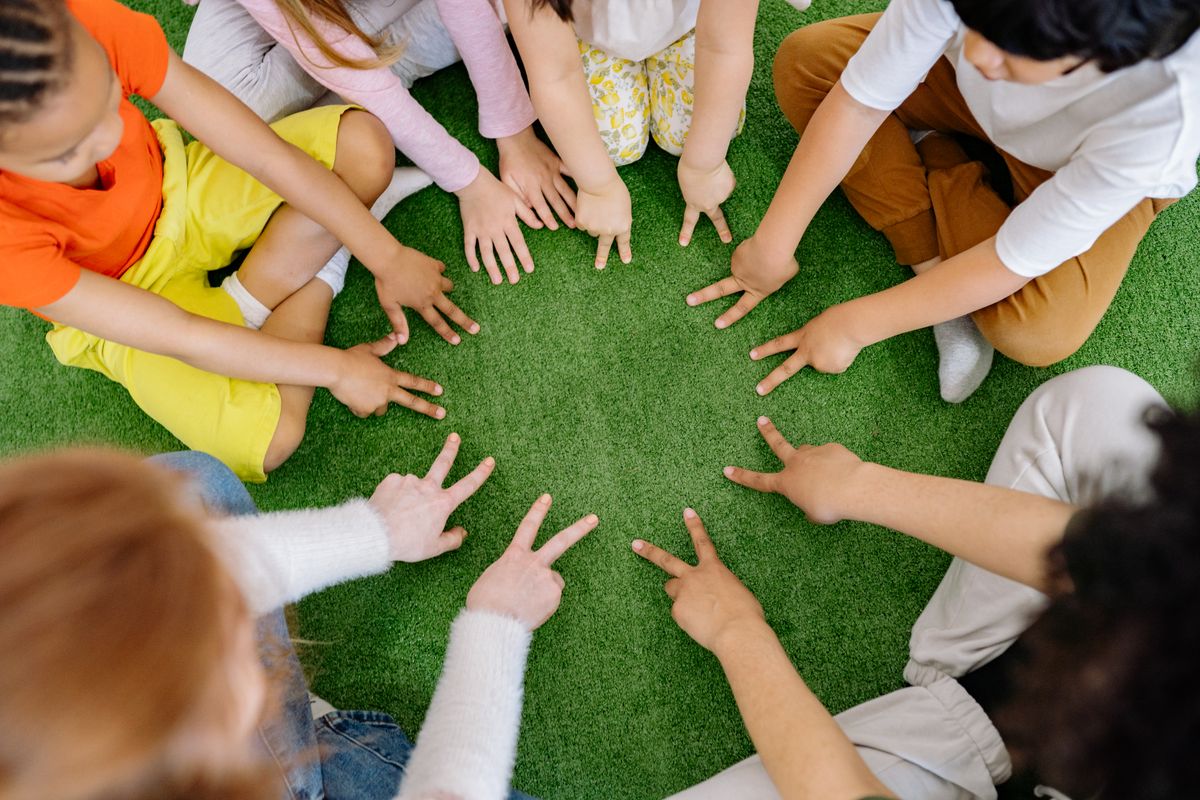
It's the question I'm asked more than almost any other, usually with a gentle, worried tilt of the head: "But what about socialising?"
There's a belief, an old and sticky one, that homeschooled children grow up a little awkward, a little sheltered, somehow missing the social skills the rest of us supposedly picked up in a classroom.
I grew up believing it too, so I understand the worry completely.
But here is the thing I eventually had to admit to myself: I had never actually met a homeschooled child to check. Not one. I had simply absorbed the idea, the way we absorb so many things when we're young, and carried it around for years as though it were fact.
Where does this belief even come from?
When I really sat with it, I couldn't find the evidence. I couldn't point to a single homeschooled person I'd known who proved the stereotype true, because I hadn't known any. The belief hadn't come from experience at all. It had been handed to me, gently and repeatedly, until it felt like plain common sense.
So much of what we "know" about how children should be raised is like this. Conditioned, inherited, rarely questioned. And this one, I think, deserves a good, honest question.
A chance dinner conversation
A few months ago, we went out for dinner and got chatting with the loveliest couple visiting from America. One of those easy, unexpected conversations that stretches long past the meal.
They had a little boy about the same age as our daughter, around one and a half, so of course the conversation found its way to how children learn. And then the husband mentioned, quite casually, that he had been homeschooled his entire life.
I'll be honest. Some old part of my brain paused, half waiting for the "social issues" to reveal themselves.
They never did. He was warm, funny, endlessly easy to talk to, one of the most naturally sociable people we had met in a long while. He now runs a thriving Pokemon card business, which takes no small amount of connecting with people. Homeschooled his whole life, and flourishing, in exactly the way I had been quietly taught wasn't possible.
The myth didn't survive one dinner. It certainly hasn't survived the years since.
We are all a little bit weird (and isn't that lovely?)
Here is something I have come to believe: we are all a little bit weird, every single one of us, and how beautiful is that?
Some of us are introverts. Some of us are extroverts. Some children light up in a crowd, and some need to slip away and recharge. That isn't a homeschooling thing, or a school thing. It's a personality trait, as much a part of a child as the colour of their eyes.
A quiet, thoughtful child is not a child who has been failed socially. They are simply themselves.
Sometimes the classroom is the harder place
If anything, I think our quieter, more introverted children often struggle more in a traditional classroom, not less. They are asked to socialise on demand, all day, every day, whether their social battery is full or long since empty. There is very little room to say, "I need a moment."
For some children, that constant, compulsory togetherness is the exhausting part, not the connection itself.
Socialising, the real-world way
Because the truth is that connection was never confined to a single room full of same-aged children. It lives out in the world.
Homeschooled children socialise by being in the world: travelling, exploring, meeting people of all ages, joining sports and clubs and other activities, chatting to the person at the market, making a friend at the park.
Our own baby girl is socialising constantly, and she isn't yet two. While we're out for a coffee, on a walk, doing the groceries, choosing books at the library. While I'm playing padel or at the gym, she's watching, waving, babbling, learning how people are with one another. Real people, of all ages, in real life.
That, to me, is a richer social education than any single classroom could offer.
Not just children their own age
And here is the part I find most beautiful of all. A homeschooled child isn't confined to a room of thirty others who simply happen to share their birth year. When you stop and think about it, where else in life are we ever sorted quite so strictly by age?
With a little guidance from you, a child gets to move between worlds. They can chat with the grandmother at the market, play alongside older children, be gentle and patient with a smaller one, sit and listen at a table full of adults, and meet families from entirely different countries and cultures. They learn to read a room, to adjust, to find their way with all sorts of people.
That is a kind of social intelligence a same-age classroom simply cannot offer. Our daughter is growing up among people from all over the world, and difference is simply her normal.
So, but what about socialising?
The next time someone asks you, with that worried little tilt of the head, you can smile and answer honestly: they socialise beautifully, just not always in the way you might expect, and often in ways that suit exactly who they are.
If you'd love to talk through what a connected, sociable homeschooling life could look like for your family, you're always welcome to book a free 15-minute call and we can map it out together.
Not sure where to start?
Book a free 15-minute call and we'll talk through where your family is right now, no pressure, no jargon.
Book a free call